


HIGHER EDUCATION COMMUNICATION
Mass texting for universities that actually reaches students
Your students already live on their phones. The question is whether your campus communications show up there too. Text-Em-All helps universities send tuition reminders, registration deadlines, safety alerts, and event updates directly to the device students check first, with segmentation by department, residence hall, or student organization.
What is mass texting for universities?
Mass texting for universities is a broadcast messaging system that lets colleges and higher education institutions send SMS messages to students, staff, and faculty at scale. Administrators use it to send financial aid deadlines, registration reminders, campus safety alerts, and event updates — reaching thousands of contacts at once without manual outreach.
Why universities choose Text-Em-All
Most campus communication tools were built for IT departments, not the administrators who use them daily. Text-Em-All is different. Universities use it to reach students on the channel they actually check, without submitting a help desk ticket or sitting through a training session. Setup takes minutes, and your first broadcast goes out the same day.
Students actually see it
Text has a 98% open rate compared to roughly 30% for email. When a financial aid deadline or campus closure needs to reach every student, text is the only channel that reliably gets there.
No IT team required
Any administrator can build a contact list, compose a message, and send to thousands in a single broadcast. There's no software to install, no training manual, and no support ticket to file before your first send.
Send to the right people
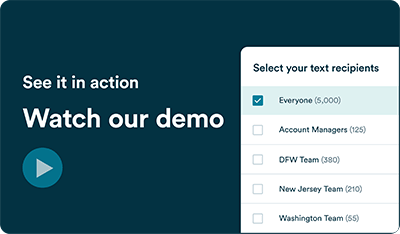
Segment contacts by department, residence hall, student organization, or enrollment status. Financial aid messages go to students who need them. Athletics updates go to the teams. Nobody gets a message that isn't relevant to them.
98%
of text messages are opened
94%
of universities use SMS alerts for emergencies
65%
of students respond at least once
How universities use Text-Em-All
Universities send dozens of different message types across dozens of departments, and most platforms weren't built to handle that range simply. Text-Em-All covers the full scope — from financial aid deadlines and registration reminders to emergency alerts and alumni outreach — from a single account any department can use without specialized training.
Financial aid deadlines
Send reminders before FAFSA deadlines, award acceptance windows, and disbursement dates. Schedule messages weeks in advance and let the platform handle delivery.
Registration and enrollment
Notify students when registration opens, when waitlists move, and when add/drop deadlines approach. Two-way texting lets students reply with questions and get answers from the right department.
Campus safety and closures
Send emergency alerts, weather closures, and safety notifications to the entire campus or specific buildings in seconds. Text is the only channel fast enough to count on when something urgent happens.
Event invitations
Promote campus events, send day-of reminders, and follow up after. One university reported a 60% increase in event attendance after adding text reminders to their outreach mix.
Student surveys
Send a keyword-triggered survey to collect student responses in real time. Results compile automatically — no spreadsheet needed.
Alumni communication
Keep graduates connected with reunion invites and giving campaign updates. Segment by graduation year, major, or giving history so every message stays relevant.
Who uses Text-Em-All at universities
From a 200-student community college to a 40,000-student research university, the communication gaps are the same. Here's who on campus actually uses Text-Em-All.
Registrar's office
Send registration deadlines and transcript updates to students in a single broadcast. When a date changes, everyone who needs to know hears it at the same time.
Financial aid office
Remind students about FAFSA deadlines and award acceptance windows before they miss them. One text at the right time prevents most of the follow-up work.
Student affairs
Promote events, send counseling reminders, and follow up with students who need outreach. Two-way texting means students can reply and get a real answer from the right person.
Emergency management
Send campus-wide safety alerts and weather closures in seconds. Every contact gets the message at the same time, with no gap between who hears first and who hears last.
How to send your first university text broadcast
Sending a mass text with Text-Em-All takes four steps: import your contacts, compose your message, send or schedule your broadcast, and review your results. Most administrators are set up and sending within a single session after completing carrier registration.
01
Add contacts
Upload a CSV or add numbers manually. Text-Em-All automatically identifies textable numbers and filters out the ones that can't receive messages. Organize contacts into groups for easy segmentation later.
02
Compose your message
Write your text, add personalization tags if needed, and include any links at the end. Choose between a text message, voice message, or both.
03
Schedule or send
Send immediately or schedule for a specific date and time. Set recurring reminders for deadlines like tuition due dates and let the platform handle delivery.
04
Review your results
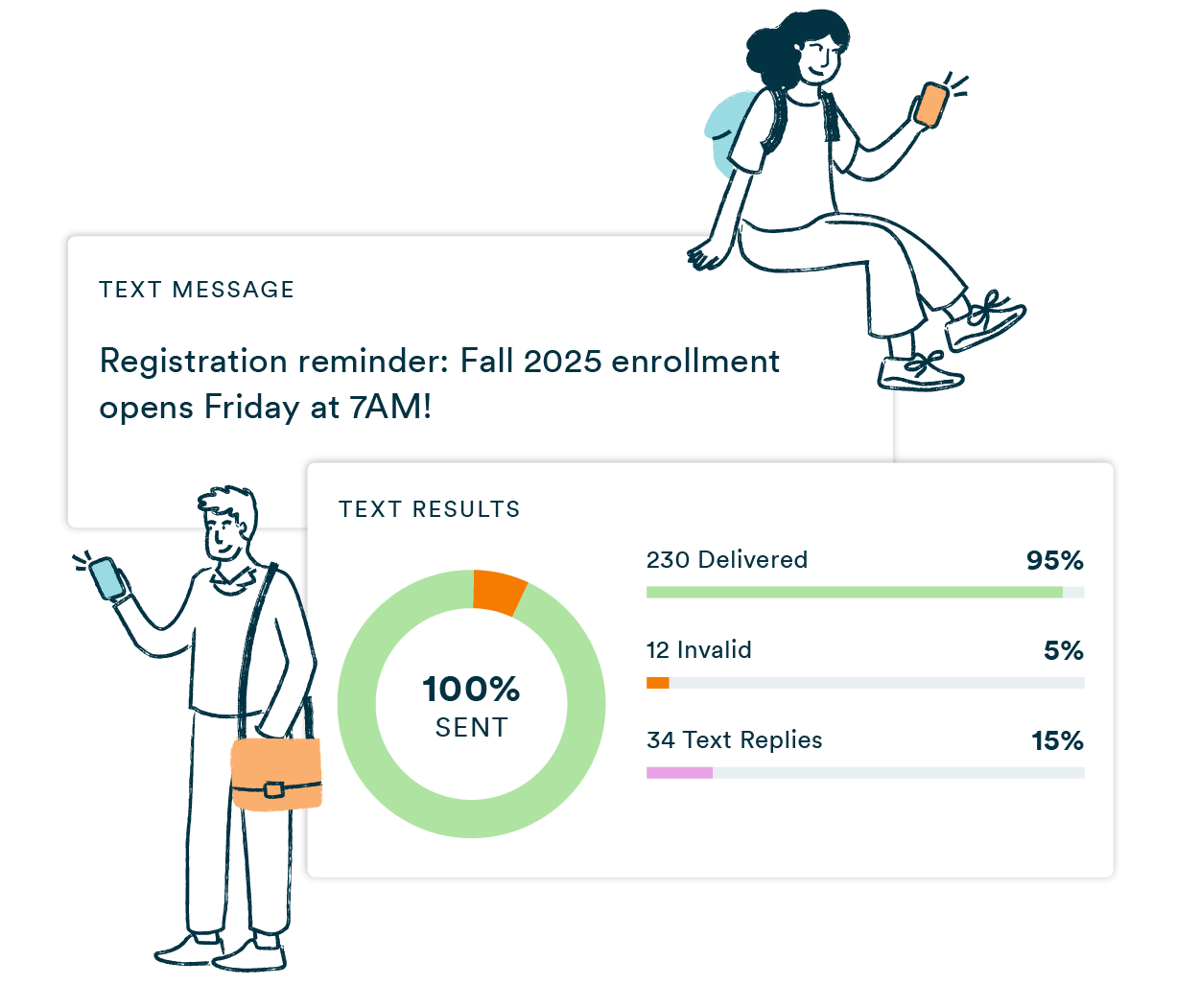
Open your broadcast details to see delivery status for every contact. Track who received the message, who replied, and which numbers need to be updated.
Text-Em-All helps us avoid having to send individual messages to our community of students. It saves us a lot of time, and also delivers messages to our community the way they prefer: on their phone.
- John H., Program Director
Frequently asked questions about mass texting for universities
-
Why aren't students responding to our campus emails?
Email open rates in higher education average around 30%, meaning roughly 7 in 10 students never see a message sent to their inbox. Text messages have a 98% open rate and are typically read within minutes of delivery. For time-sensitive communications like financial aid deadlines or registration reminders, the gap between those two numbers has real consequences for students.
-
Is mass texting appropriate for all types of university communications?
Text messaging works well for time-sensitive, action-required communications: deadline reminders, safety alerts, event invitations, and registration notifications. It works less well for long-form content like policy documents or detailed instructions — those belong in email or a student portal. The most effective university texting programs use text to drive awareness and action, then point students to the right place for details.
Learn more about texting vs. email.
-
How is Text-Em-All different from our existing student information system?
Most student information systems include basic email and notification tools, but they weren't built for mass SMS. Text-Em-All is purpose-built for broadcast messaging — it handles carrier registration, opt-out compliance, two-way conversations, and delivery reporting in one place. It connects to existing systems via API or Zapier rather than replacing them.
-
Can we segment messages by department, residence hall, or student group?
Yes. Text-Em-All lets you organize contacts into groups and send to one group, multiple groups, or your entire list in the same broadcast. Financial aid messages go to the students who need them. Athletics updates go to the right teams. No student receives a message that isn't relevant to them.
-
How much does mass texting for universities cost?
Text-Em-All offers two pricing options: a pay-as-you-go Credits plan and a Monthly plan. The Credits plan charges per message sent with no monthly commitment, which works well for universities with variable sending volumes. The Monthly plan offers a set number of messages per month at a predictable rate. Both plans include access to core features with no long-term contract.
-
Does Text-Em-All handle SMS compliance for universities?
Text-Em-All handles 10DLC carrier registration on your behalf at no additional charge, with most registrations processed within 1-2 business days. Universities are responsible for managing their own opt-in records and ensuring recipients have consented to receive messages. Text-Em-All's platform includes built-in opt-out management — any contact who replies STOP is automatically removed from future broadcasts.
-
How quickly can a university get started with Text-Em-All?
Creating an account is free and takes a few minutes. Before sending your first broadcast, you'll need to complete 10DLC carrier registration, which Text-Em-All handles for you and typically processes within 1-2 business days. Once registration is approved, you can build your contact lists and send your first broadcast.
Start reaching students where they actually are
Text-Em-All is free to set up, requires no long-term contract, and handles carrier registration for you. Most universities are sending their first broadcast within 1-2 business days of signing up.