

Skip to the main content.

SMS FOR ECOMMERCE

SMS marketing for ecommerce brands that want customers to act

You're already spending to get shoppers to your site. Text-Em-All makes sure they come back. Send abandoned cart reminders, flash sale alerts, restock notifications, and loyalty rewards straight to the device your customers check before they check anything else.

Set up my free account Get a demo
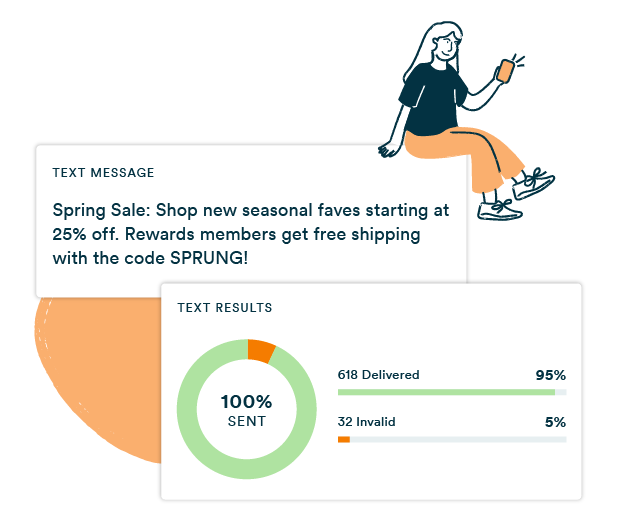
A mass texting platform showing an SMS marketing broadcast sent to customers announcing a spring sale with 25% off seasonal items and free shipping for rewards members using the code SPRUNG, alongside text results showing 618 messages delivered at a 95% delivery rate with 32 invalid numbers at 5%.
albertsons-logo-2 kroger-logo-2 IKEA costco-logo ALDI magnolia-logo gap-logo-3

What is SMS marketing for ecommerce?

SMS marketing for ecommerce is the practice of sending promotional and transactional text messages to customers who have opted in to hear from a brand. Ecommerce businesses use it to send flash sales, abandoned cart reminders, shipping updates, and back-in-stock alerts, reaching customers on a channel they check within minutes of receiving a message.

Why ecommerce brands choose Text-Em-All

Texts customers open

Email open rates in ecommerce average around 20%. SMS open rates run closer to 98%, which means your promotions, alerts, and updates reach customers instead of sitting unread in an inbox.

Set up in minutes, not weeks

Most SMS platforms require onboarding calls, contracts, and a learning curve. Text-Em-All is built for teams without a dedicated SMS specialist — upload your contacts, write your message, and send.

Compliant from the start

Ecommerce SMS comes with real regulatory requirements around consent, opt-outs, and carrier registration. Text-Em-All's built-in compliance tools handle 10DLC registration and opt-out management.

How ecommerce brands use SMS marketing

From a one-person Shopify store to a national retail brand, the communication challenges are the same. Here's what ecommerce teams actually use Text-Em-All for.

Abandoned cart recovery

Send an automated text within an hour of a customer leaving items in their cart. A direct message with a link back recovers sales that email follow-ups miss.

Flash sales and promotions

Text your subscriber list when a sale goes live or a promo code drops. SMS reaches customers within minutes, which matters when a flash sale runs for four hours.

Back-in-stock alerts

Let waiting customers know the moment a product is available again. Give them a direct link before stock runs out and they buy somewhere else.

Order and shipping updates

Send order confirmations and shipping notifications without relying on customers to check their email. Transactional texts reduce support questions and keep customers informed before they ask.

Loyal customers

Reach customers who have already bought from you with personalized offers and reorder reminders. Your best customers opted in — text messages are the most direct way to bring them back.

Post-purchase feedback

Send a short text after delivery asking customers to rate their experience. Response rates on SMS feedback requests run higher than email surveys because the ask is simple and the reply takes seconds.

Who uses SMS marketing for ecommerce?

Ecommerce businesses of every size use SMS marketing to reach customers at the right moment. The use cases look different depending on the team, but the underlying problem is the same: getting the right message to the right person before they move on.

Direct-to-consumer brands

DTC brands live and die by repeat purchase rates. SMS gives them a direct line to customers who opted in, without competing for attention in a crowded email inbox.


Retail and brick-and-mortar stores

Physical retailers use SMS to drive foot traffic with location-specific promotions and event announcements. A text about a one-day in-store sale reaches local customers faster than any other channel.

Online marketplaces retailers

Larger retailers use SMS to keep customers updated on orders, flag relevant promotions, and reduce support volume. Segmented lists mean different customers get messages that are relevant to what they actually bought.


Subscription businesses

Subscription brands use SMS to reduce churn, send renewal reminders, and notify members of new products or exclusive offers. Customers who opted in to a subscription are among the highest-intent audiences to text.

How to get started with ecommerce SMS marketing

Getting started with ecommerce SMS marketing takes four steps: create a free account, upload a list of opted-in contacts, write and send your first message, and track delivery and replies in your dashboard. Most ecommerce brands send their first broadcast within minutes of signing up, with no contracts or onboarding calls required.

01
Create a free account

Sign up and access the platform immediately — no contracts, no onboarding call, no sales call to sit through first.

02
Upload your contact list

Import a spreadsheet of customers who have opted in to receive texts. Text-Em-All automatically filters out numbers that can't receive messages.

03
Write and send your message

Choose your audience, write your message, and schedule it or send immediately. Most first-time users send their first broadcast within minutes of signing up.

04
Track performance

See delivery reports, open activity, and replies in your dashboard. Use what you learn to sharpen your next send.

Orange-stars

The whole process of implementing Text-Em-All in our workflow was very smooth. They have super transparent pricing and a very helpful team that helps with training and any questions we have. I still talk about how great this team is to work with! Couldn't recommend them more!

- Zachary, Wyatt's DME

16,000+ organizations served
 
100% employee-owned
 
95%+ message deliverability
 
4.7★ 1,036 reviews on Trustpilot

Frequently asked ecommerce SMS marketing questions

Your customers are checking their phones. Meet them there.

Create a free account in minutes and send your first ecommerce broadcast with no contracts, no onboarding calls, and no minimum spend.